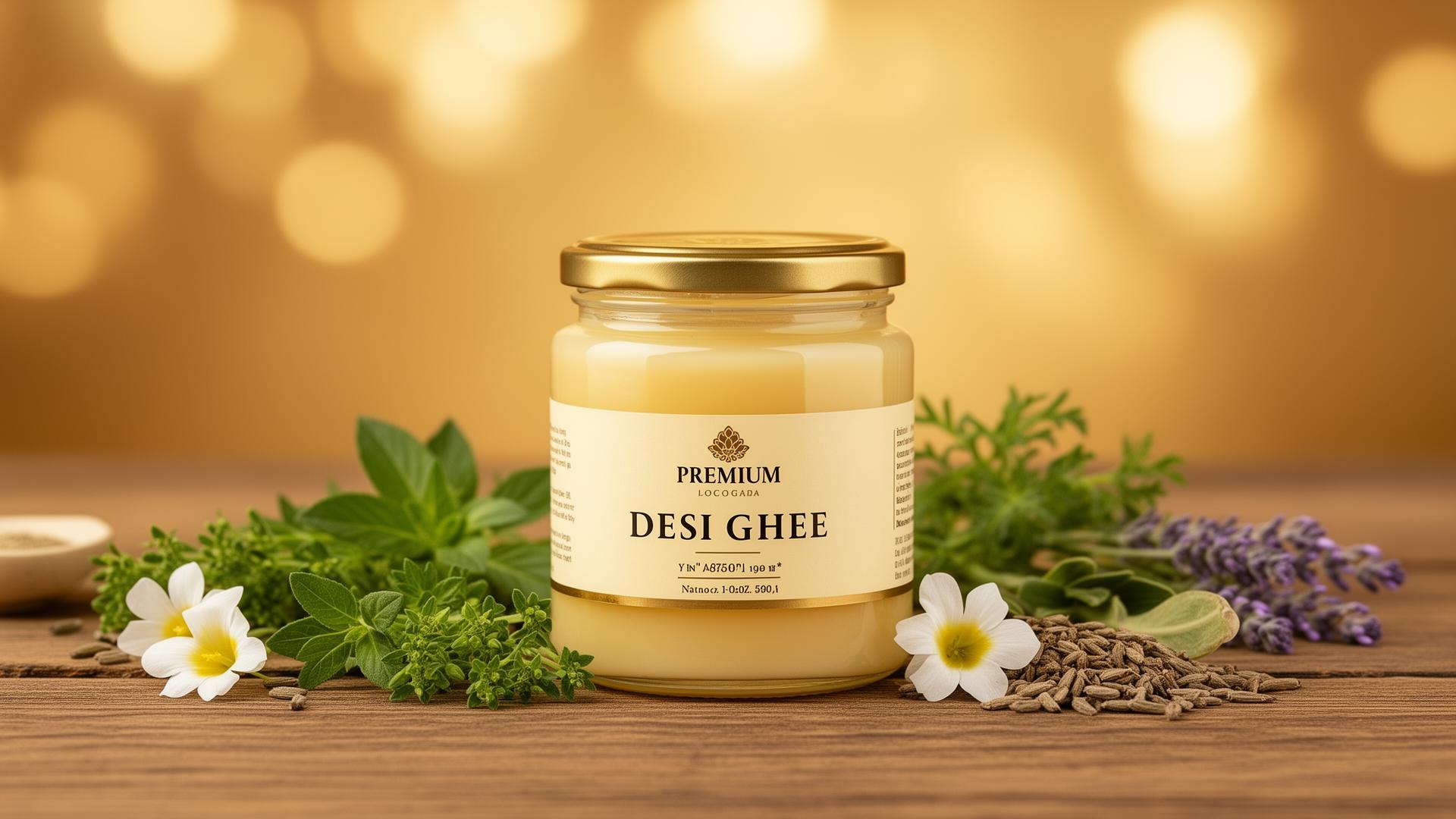
Modern commercial ghee is often mass-produced using direct cream separation—a fast process that yields high quantities but strips the final product of its real nutritional value. In contrast, the ancient Bilona method is a labor of love.
First, fresh A2 milk from indigenous cows is boiled and inoculated with a natural curd culture. Setting it overnight allows lactobacilli to break down lactose, which makes the resulting ghee incredibly easy to digest, even for those with mild dairy sensitivities.
The Churning Process
We use a wooden churner (the Bilona) to separate the butter (makkhan) from the buttermilk. This bi-directional churning maintains a specific temperature and incorporates air, altering the lipid structure favorably.
Finally, the makkhan is slow-cooked in earthen pots. This gradual heating process evaporates the water content without burning the milk solids, resulting in that signature nutty aroma and rich golden color.
Why it Matters
This traditional method preserves complex lipids, fat-soluble vitamins (A, D, E, K), and significantly higher levels of Butyric acid compared to generic ghee. It’s not just tradition; it’s food science acting in harmony with nature.